
Welcome to the April edition of the DCAN Dispatch.
Make Big Polluters Pay
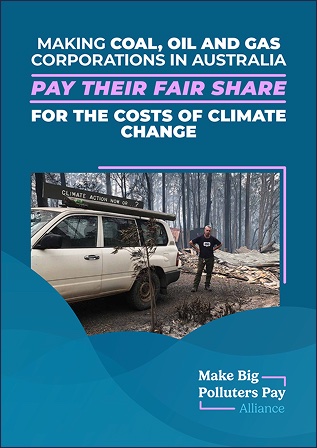
The DCAN working group on Communities for Climate Compensation recently had its first in-person meeting. This campaign, also known as Make Big Polluters Pay, aims to build community support for councils to pass a motion that calls for a levy on fossil fuel industries. The levy would fund climate disaster recovery, infrastructure repair, and resilience for communities. We are all very impressed with the level of thought and support behind this national campaign which is being led by Tipping Point. We are also pleased to learn that four councils, three in Victoria as well as the City of Sydney, have already passed motions along these lines.
Part of the campaign involves collecting information on community support for the levy which we can then present to our councillors. We anticipate that we will soon have a short survey and petition which we would love you to fill out. We’ll remind you and provide a link in the next Dispatch.
Anyone who wants to help can contact Lesley.
US Radio PBS recently shared news about the Portland (US) Clean Energy Fund which imposes a one per cent business licence surcharge on its largest corporate retail chains and generates around $200 million a year to help the 2.5 million Portlanders cope with global warming. So it can be done!
National Walk for Truth, 19 April - 27 May

The National Walk for Truth kicks off this Sunday at Parliament house at 9.00am. Please join us in supporting First Peoples who are calling on the Federal government to commit to truth-telling. Truth-telling is about healing, respect and national repair. DCAN believes there can be no climate justice without justice for First Peoples. We would love to see you there! Check out the schedule of events and register here.

Inquiry into renewable and affordable energy for apartments
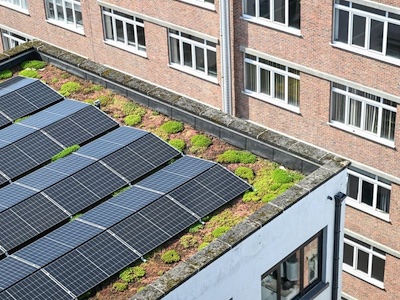
About 12 per cent of Victoria’s 2.5 million households live in apartments, and low‑income residents are disproportionately represented among them. Many of these households have been left behind in the rooftop solar boom that has transformed Australia’s suburbs.
DCAN and Lighter Footprints recently collaborated to write a submission to and attend hearings for an inquiry into renewable and affordable energy for apartments. There is a wealth of ideas and issues covered in our submission. To read more you can access the inquiry website here. You can also find the DCAN and Lighter Footprints submission here and the transcript of the hearing here.
Electrification for Activity Centres
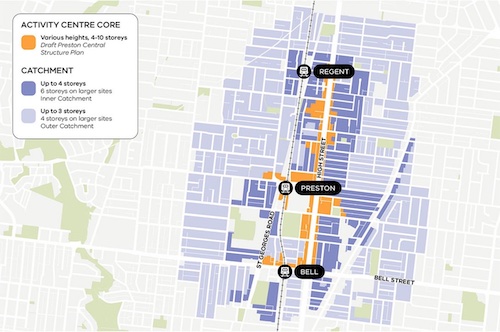
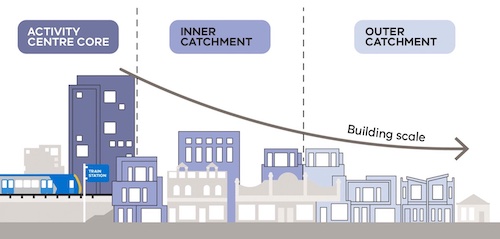
Electrification remains a powerful way to tackle climate change while also easing household costs, even as changes to planning rules in Activity Centres create new challenges. Updated zoning rules may have negative impacts on the performance of rooftop solar panels, particularly through potential overshadowing. However, these constraints do not prevent households from pursuing cost-saving, emissions-reducing electrification.
The top priority is to eliminate gas use entirely. For a typical Thornbury home, switching from gas heating, hot water, and cooking to efficient electric alternatives can save between $1,000 and $3,000 annually, plus around $350 in connection fees. Modern electric systems—especially those using heat pump technology—are significantly more efficient, often using a quarter of the energy required by gas.
While solar panel placement may require more careful planning under new zoning rules, options remain. Thoughtful positioning, such as maximising northern exposure or using protected courtyard spaces, can help maintain solar effectiveness.
To support households in making the transition, DCAN offers free one-on-one consultations. Book your personalised advice session here.
Disinformation War
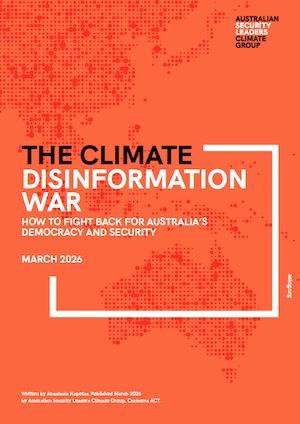
A report by the Australian Security Leaders Climate Group, the Climate Disinformation War, argues that Australia faces a serious breakdown in information integrity driven by well-funded, fossil-fuel-linked anti-climate-action campaigns — estimated to be up to $7 billion annually globally — that operate information warfare across traditional media, social platforms, and AI-generated content.
The report frames climate disinformation as a national security threat, not merely a communications problem, with risks to Australia’s sovereignty, economic resilience, disaster readiness, and democratic institutions. The rise of generative AI and consolidation of media power by a few tech giants are accelerating these threats.
Current government responses are seen as wholly inadequate against the scale of these campaigns, and civil society lacks the resources to counter them alone. Key recommendations include:
- stronger antitrust and platform regulation (drawing on EU models like the Digital Markets Act and Digital Services Act),
- urgent enforceable rules for generative AI,
- defamation law reform to stop SLAPPs (Strategic Lawsuits Against Public Participation) silencing journalists and researchers,
- investment in digital literacy, independent journalism, and climate data infrastructure.
Australia is also urged to sign the UN COP Declaration of Information Integrity on Climate.
DCAN members are encouraged to read this report and disseminate it to the wider community.
Australia's Gas Giveaway
The Albanese Government has supported an inquiry into how gas is taxed in Australia, which means reform is finally being seriously considered. This is a big shift and shows that public pressure is making a difference. DCAN has made a submission to the Inquiry which you can read here.
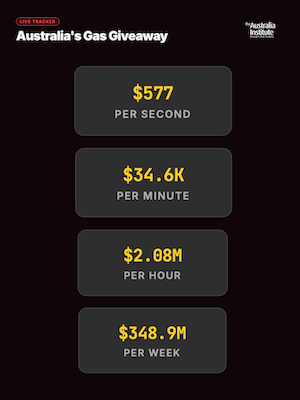
Australia is one of the world’s largest gas exporters, but we tax gas exports far less than many other countries. This has cost Australians tens of billions of dollars in lost public revenue that could have helped with cost of living relief, public services, and the transition to clean energy.
The Australia Institute has created a live tracker showing how much revenue Australia has lost by failing to properly tax gas exports. The tracker is now displayed on digital truck billboards circling Parliament House, providing a constant reminder to politicians.
You can view the tracker here and read the case for a gas export tax here.
If you haven't already done it, please sign the Australia Institute petition and the 350.org petition for a 25% gas export tax.
Electric Trucks?
Fuel price shocks are a reminder of how exposed Australia is. When conflict drives up global oil prices, it flows through to diesel, and onto the cost of transporting food, goods and essentials.
This isn’t just a cost-of-living issue. It’s a sovereignty issue. Heavy trucks move most of Australia’s freight and rely almost entirely on diesel, leaving the system vulnerable to global disruptions.
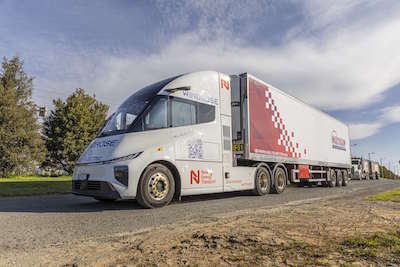
Electric trucks offer a way out. Trials in Australia show they can travel 400–500km on a single charge, fast-charge in under 30 minutes, and run at a fraction of the cost of diesel. In one case, it cost around $50 in electricity compared to $300 for the same trip with diesel.
Powered by energy we can generate here, electric trucks can reduce our reliance on imported fuel and global oil markets. The technology is already here. The question is whether we make use of it.
Read more here: B-doubling down on electric trucks, Mike Secombe, The Saturday Paper
Support our work in 2026 and beyond
Help spread the work about climate action


Please join us on Instagram, Facebook and Bluesky. Every like, comment, and share helps amplify our impact and spread the word about climate action in our community. Email us if you would like to join the DCAN social media team. We would love to have you onboard.
Want to know more about DCAN?
Why not come along to one of our monthly meetings? We usually meet on the second Thursday of each month at 7.00pm at the Bridge Preston. Please drop us an email at [email protected] to let us know if you are coming so that we can make sure to welcome you and give you an agenda ahead of the meeting.
Our next meeting will be at 7:00 pm on May 14th, 2026 in the Waratah Room at the Bridge, 261 High, Preston.
That's all for this month - thanks for reading! If you have any feedback on this newsletter, please let us know.
-
 Keith Talbot published this page in News 2026-04-21 08:33:35 +1000