
DCAN condemns weak climate targets
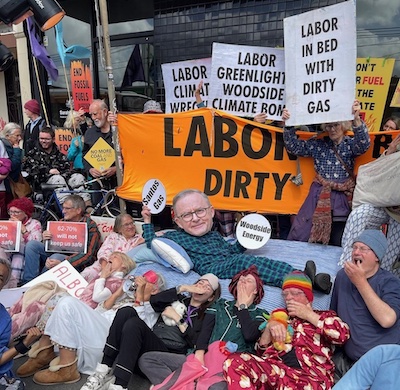
As feared, the Albanese Government has announced weak climate targets for 2035 in the range of 62-70%. Coming just days after the National Climate Risk Assessment painted a dire picture of the climate situation for Australians, these weak targets put us on track for a more dangerous world. It is a betrayal of our community and will leave us all exposed to more fires, floods, deadly heat waves and soaring clean-up bills for climate disasters.
The government has once again capitulated to coal and gas companies, leaving families to pay the price. Not only have they approved 31 new coal, oil and gas projects since first being elected, they recently rubber-stamped an extension of the mega-polluting Woodside North-West Gas Shelf project to 2070. Instead of showing bold leadership, Prime Minister Albanese has weakened Australia’s climate ambition, releasing a plan that does nothing to actually stop climate pollution.
DCAN supporters joined a national day of action yesterday outside the office of Sarah Witty, Labor MP for Melbourne, to demand stronger targets. Please call Ged Kearney to record your opposition to the weak targets. Click here for the Australian Conservation Foundation’s helpful talking points and click here for Parents for Climate’s guide.
Climate change and the SA algal bloom
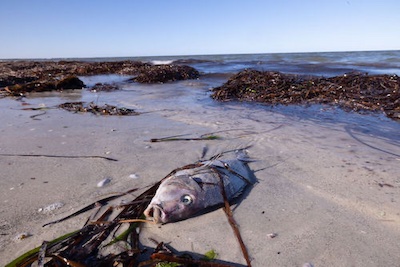
The toxic algal bloom in South Australia's coastal waters is a devastating environmental disaster leading to the death of thousands of sea creatures, significantly affecting businesses such as fishing and tourism and causing distress to people living and working near the sea.
The processes that led to the bloom are complex and not fully understood, but events like this are what we should expect from climate change. Many coastal waters are warmer, more acid and less oxygenated as a result of climate change, and algal blooms have become more common in recent decades.
In 2013 a marine heatwave had already warned the SA government that such an event might occur if high nutrient outflows were allowed to continue while climate change warmed coastal waters.
The International Panel on Climate Change (IPCC) tells us what science claims may happen, but our knowledge of the ways complex planetary systems and ecosystems work is limited. Human heating of our planet may have disastrous consequences that we cannot predict, or which we mistakenly estimate to be unlikely. For example, rapid methane release from the seabed would be terrifying!
We do know that exceeding our current level of +1.5 degrees may cross very dangerous tipping points. For our safety and for of our unique biodiversity, we need a stronger emissions reduction target rather than the modest one the government has offered.
[Photo Credit: Stefan Andrews courtesy Great Southern Reef Foundation]
Treaty is here in Victoria
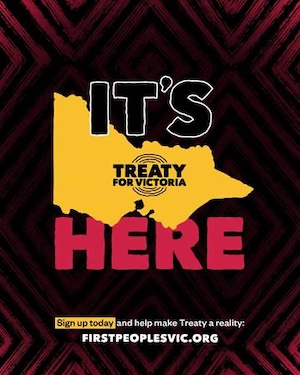
First Peoples are often at the forefront in the fight against destructive coal and gas mines and have worked tirelessly over many generations to preserve a healthy and sustainable environment. DCAN wholeheartedly supports First Peoples in their journey to Treaty and Truth telling. We welcome the momentous and historic agreement between the Victorian Government and the First Peoples’ Assembly of Victoria which has been introduced to the Victorian Parliament.
Treaty is about unity and building a better, sustainable and just future together. It’s also focused on accepting the truth about how First Peoples have been treated and supporting their right to determine their own future.
DCAN is one of 22 groups who have written an open letter to the Premier welcoming this historic moment. Read the full letter to the Premier here and find out how you can support Treaty here.
Fossil Fuel Subsidies Madness
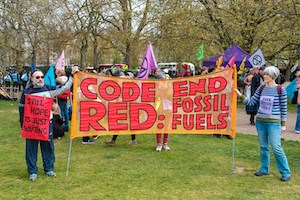
According to the Australia Institute, the Federal and State governments provided $14.9 billion worth of spending and tax breaks to assist fossil fuel producers and major users in 2024–25, a 3% increase on 2023–24.
Subsidies in the forward estimates have increased from $65 billion to a record $67 billion, a sum 14.2 times larger than the nation’s $4.75 billion disaster response fund. This increase was driven largely by the Federal Government’s Fuel Tax Credits Scheme (FTCS). The FTCS cost the Federal Budget $10.2 billion in 2024–25, up from $9.6 billion in 2023–24. The FTCS is one of the top twenty most expensive items in the Federal Budget: it was the 18th most expensive in 2023–24, and in 2024–25 it was the 16th most expensive. It is Australia’s single largest fossil fuel subsidy, worth around $1 billion to the coal industry alone.
This madness has to stop. Take action by signing the Australian Conservation Foundation petition here.
[Photo credit: Ehimetalor Unuabona on Unsplash]
Electrify Your Home - Get off gas
Would you like your electricity consumption from the grid to look like this?
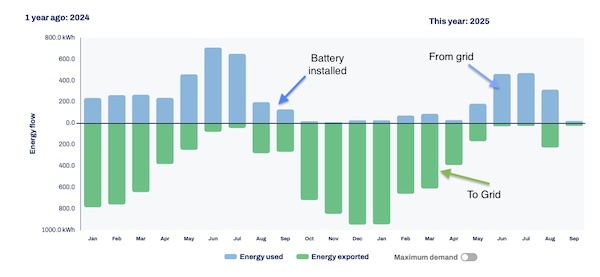
This is the monthly electricity consumption and solar feed-in for a double-fronted weatherboard house in Northcote with 3 adults. Prior to mid August 2024 it was fully electrified. In late August 2024 a home storage battery was installed. From mid September to mid May almost no grid electricity was used. The home was frequently air conditioned and an EV with low use was charged. The battery covered all the aircon use in 2025. In 2024, prior to the battery installation, evening usage was significantly higher, especially from January to April.
This graph was taken from the Citipower/Powercorp website, the electricity distribution service for a lot of Darebin. If you want to see your electricity usage, click here to set up an account. You will need your meter number (NMI) that is on your electricity bill.
To learn more go to the DCAN website home page, and choose “Electrify” from the menu. The steps to get off gas are there for you to read, and you can book a consultation with DCAN volunteer Graham Moore who can help you navigate your way off gas to a low emissions, low cost future.
Plug In - a practical guide to electrifying your home
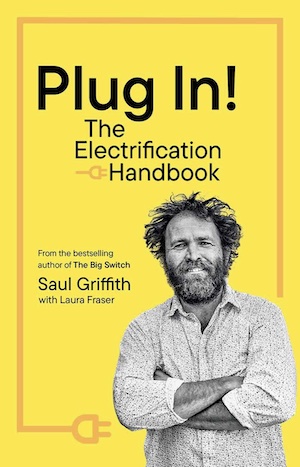
This new book by Saul Griffith is a must read for people starting or are on the home electrification journey. Check out these podcasts from ABC Listen and Renew Economy’s SwitchedOn Podcast.
To read about it go to the Good Reading Magazine here.
The book is readily available at good book stores for around $30 and there are three copies at the Darebin Library.
Can art stop a bullet (or promote climate action)?
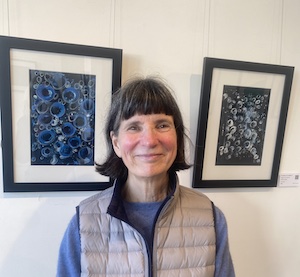
Recently DCAN members were treated to a private showing of artworks and a talk by the artist, Megan-Jane Johnstone, at Gallery Unbound in High Street Northcote. Megan's exhibition, As In Nature, explores the ways in which human activity has influenced climate and the environment. The aim of her work, Megan explained, is to “evoke wonder, deepen appreciation and encourage awareness in a time of environmental urgency.” She noted that William Kelly's 2019 film, Can Art Stop a Bullet, was a powerful influence on her practice.
Help DCAN Grow on Social Media!
Exciting news! DCAN is now on Instagram and Bluesky in addition to Facebook, and we’d love you to join us there. By following and engaging with our posts, you help spread the word about climate action in our community.
 Instagram – See inspiring photos, event updates, and climate tips. darebin_climate_action
 Bluesky – Join the conversation on policies, actions, and solutions. @darebincan.bsky.social
 Facebook – Keep up to date with DCAN activities and climate news. www.facebook.com/DarebinCAN
Every like, comment, and share helps amplify our impact. Follow us today and be part of the movement for a greener future! Please email us if you would like to join the DCAN social media team.
Want to know more about DCAN?
Why not come along to one of our monthly meetings? We usually meet on the second Thursday of each month at 7.00pm at the Bridge Preston. Please drop us an email at [email protected] to let us know if you are coming so that we can make sure to welcome you and give you an agenda ahead of the meeting.
Our next meeting will be at 7:00 pm on October 9th in the Waratah Room at the Bridge, 261 High, Preston.
-
 Keith Talbot published this page in News 2025-09-23 06:58:21 +1000